


CHEETAH – THE FASTEST HUNTER OF THE SAVANNAH
Cheetah King (Acinonyx jubatus) is an extraordinary predator, known for its unmatched speed and elegance. It primarily inhabits the open areas of Africa – savannas, semi-deserts, and vast grasslands – where space allows it to fully utilize its greatest asset: impressive speed. Regarded as the fastest land mammal in the world, it can accelerate to over 100 km/h during short, intense chases for prey, making it the true king of speed in the animal kingdom.
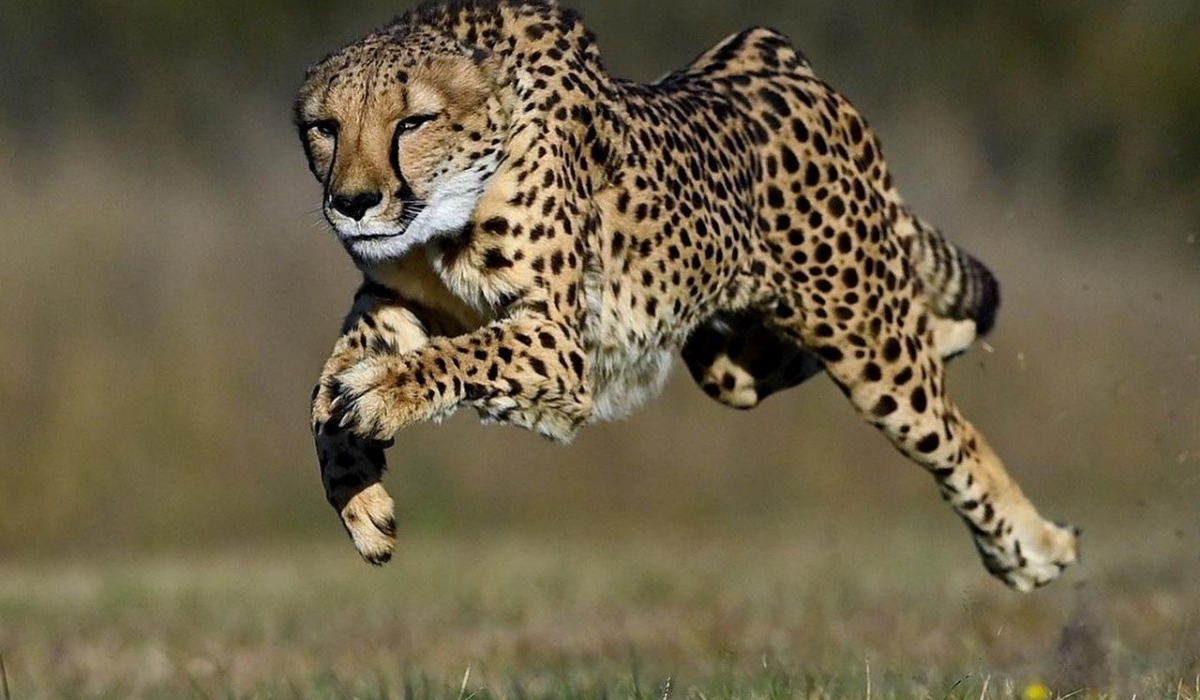
The cheetah’s slender, lightweight body is perfectly adapted for fast running. Long legs, a flexible spine, and a long tail that acts as a rudder allow it to maintain balance and change direction instantly while chasing prey. Its short, light-colored coat is covered with numerous black spots that help with camouflage on grassy plains. The distinctive black stripes running from the eyes to the mouth – the so-called “cheetah tears” – reduce glare and improve visual focus during hunting.
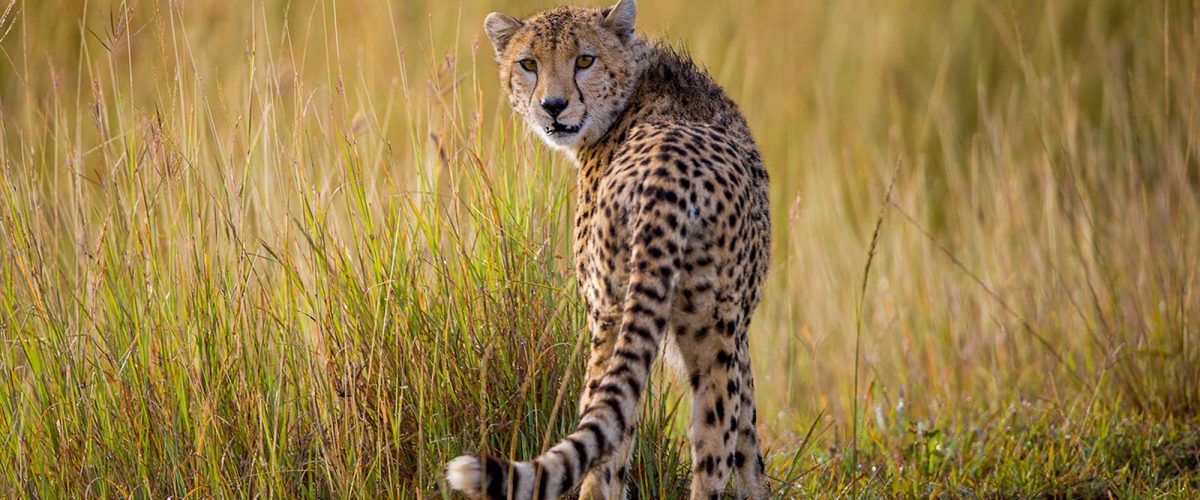
Unlike most cats, the cheetah cannot fully retract its claws. This functions like natural spikes in sprinting shoes during a run, increasing traction and stability at tremendous speeds.
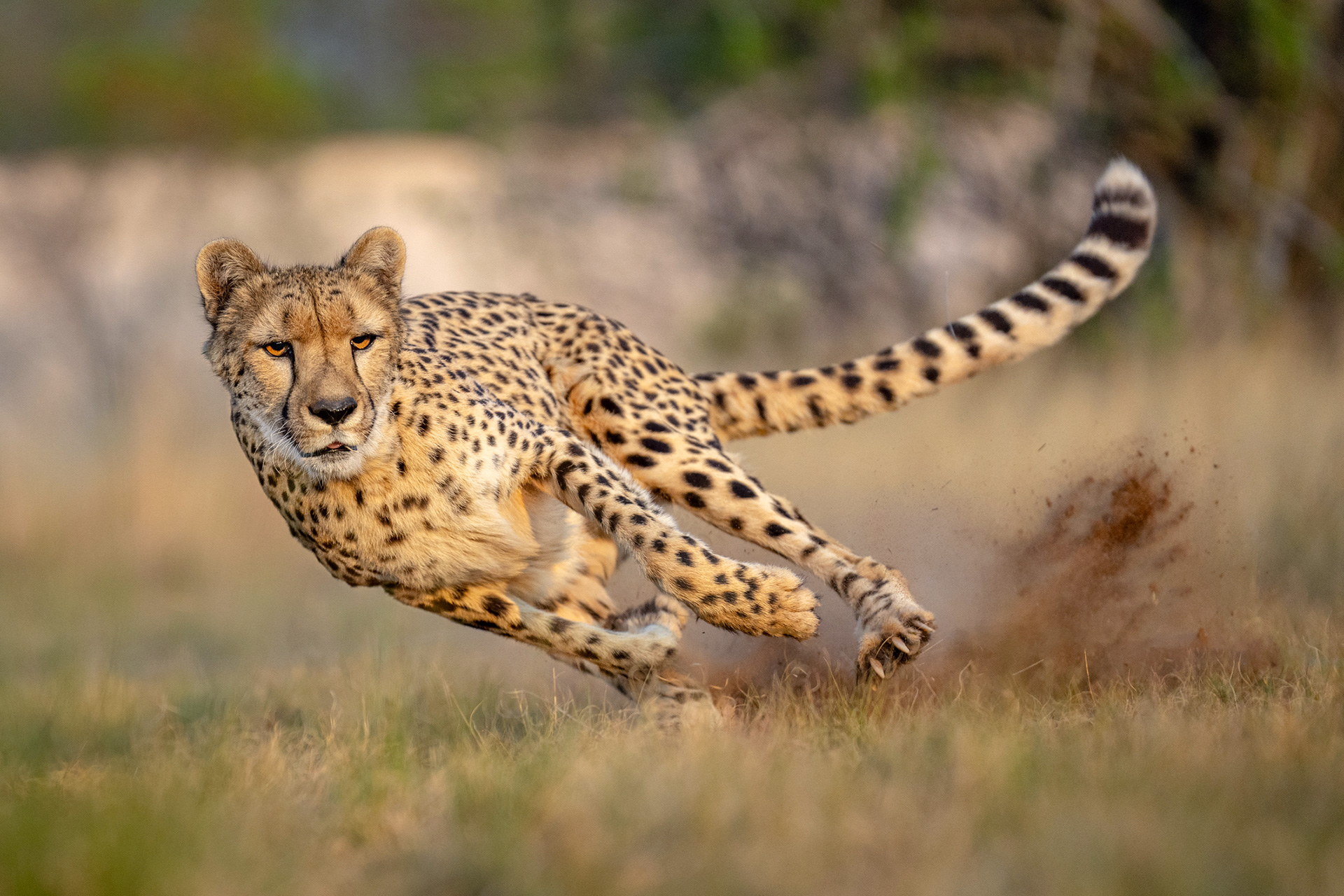
Cheetahs hunt mainly during the day, using excellent vision and rapid acceleration. They usually target medium-sized antelopes, gazelles, or young individuals of other savanna animals. Hunting consists of a short, intense sprint, usually lasting only a few seconds – if the attack fails, the cheetah often abandons the chase, as it expends enormous amounts of energy.
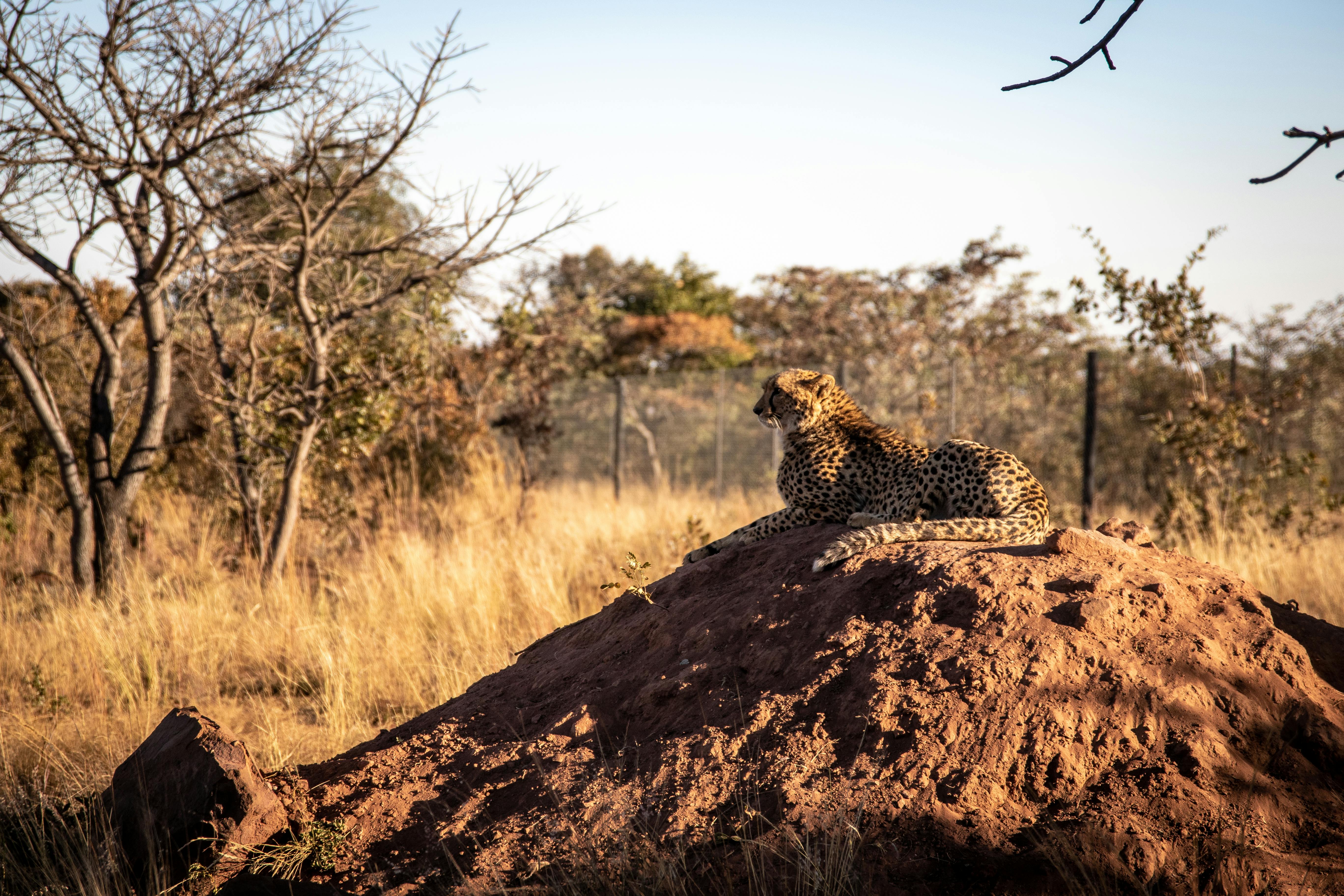
Although an extremely effective hunter, the cheetah is among Africa’s more endangered predators. Habitat loss, human conflicts, and declining prey numbers have caused the population to gradually decrease. For this reason, the species is considered threatened and protected in many regions worldwide.
CHARACTERISTIC FEATURES
- Behavior – fast, precise, and focused. The cheetah relies on lightning acceleration and perfect timing for its attack.
- Habitat – open savannas, semi-deserts, and steppes of Africa and parts of Asia.
- Coat – light sandy fur covered with black spots and distinctive black “tear marks” under the eyes.
- Hunting technique – short, extremely fast chases ending with a dynamic takedown of prey.
- Lifestyle – usually solitary or in small groups; mainly active during the day.